Wednesday, May 27, 2015

New Board Member Workshops 2015


The past couple of weeks the KASB Leadership Services team has been on the road working with new school boards.  Stops at Manhattan, Oakley, and Sublette the last week of April and this past week at Clearwater and Greenbush.  Nearly 400 people have attended the sessions that included many administrators and mentor board members.  The topics revolve around the seven powers of a school board. 

The seven powers are really the learning objectives for the day.  Understanding these important powers allows each board to move school districts forward.

Gary Sechrist shares the importance of building a “positive” board culture.  He shares and explains the governance clock to help new board members understand the role of the board in leading the school district.  Discussions on trust, communication and teamwork help new board members understand the importance of building relationships and focusing on leadership. 

Dr. Brian Jordan presents information to new board members about the focus of leadership and student success.  Achievement drive the conversations and all attendees have departed with a better understanding of how boards help student and district graduate students ready for careers or college.

We start back up again this weekend in Hays and conclude the workshops in Topeka on June 20.  School district leaders have commented that it is a great day to learn and share ideas with other committed educational leaders.


Thursday, April 23, 2015

BOARD MEMBER DO'S AND DON'TS


Good Board Members Do:

·      Recognize that their responsibility is not to run the schools, but to see that they are run well.

·      Work through the properly appointed administrative officers according to the organization as planned.

·      Function as part of a policy-forming and control board rather than as part of the administrative team.

·      Refer, as far as possible, all complaints and requests to the appropriate administrative officer.

·      Familiarize themselves in a broad and non-technical manner with the problems of the school system.

·      Try to interpret to the superintendent the attitudes, wishes, and needs of the people of the district and try to interpret to the people the needs, problems and progress of the schools.

·      Voice opinions frankly in board meetings and vote for what seems best for all children of the district.

·      Recognize fully that the appropriate administrative officer is entirely responsible for carrying out a particular policy in accordance with state law and local regulations.

·      Help to frame policies and plans only after considering the recommendations of the appropriate administrative officer, together with his/her reasons for making such recommendations.

·      Require oral and written reports that are requested through the administration for the purpose of keeping the board properly informed on school matters.

·      Give all school officials authority in keeping with their responsibilities.  Vote only for the best-trained technical and professional employees who have been properly recommended by the superintendent.

·      Visit the schools to gain clearer understanding of school problems, but not to interfere in the day-by-day administration of the schools.     

·      Establish criteria for evaluating the efficiency and effectiveness of the superintendent.

·      Present personal criticism of school employees only to the appropriate administrative officer.

·      Support and protect school officials in the performance of their duties.

·      Give friendly counsel and advice to administrative officers.

·      Be always mindful that the KEY WORK of the school board with the leadership of the superintendent is to improve student achievement.

Good Board Members Do Not:

·      Interfere with the day-by-day routine of school administration and supervision.

·      Refuse to support worthwhile school programs because of personal reasons.

·      Show favoritism to relatives or friends.

·      Make promises and commitments before the questions are fully discussed in the board meetings.

·      Join a clique to control board activity.

·      Use board membership for political or business advancement for themselves, their family or friends.

·      Surprise the appropriate administrative officers in school board meetings.


Thursday, April 9, 2015

School Boards and Baseball, Play Ball!

The election results are in, and some of you will have new faces around the table. Now that we know who will be at the board table July 1, it's time to start the process of building a new board team with the new and experienced board members.

Admittedly I am not a huge baseball fan, but I do like following the Royals, and there are some similar parallels between Spring training in baseball and the transition that occurs when new board members are elected to the local school board. Regardless of past seasons' successes or failures of a baseball team, Spring training for baseball teams provides an opportunity for teams to set the stage for the upcoming season's success through the acquisition of new team members or the development of skills with existing team members.

Your school board has a culture that has been built through training, experience, education, and on-going communication, hopefully resulting in successes over the past two years since the last election. Every two years as a board goes through some transitions related to the election cycle, it makes sense to "revisit" our school board culture and set the stage for success in the coming years for your school district.

Setting the stage for this success starts with developing the new school board members' skills and knowledge, revisiting our focus as a school board and taking stock of our board culture - good or bad. Revisiting the board's culture will not only benefit current board members, but assist those new board members in their transition.  


Developing the new board members is an important step in enhancing the school board culture and given them the opportunity to reach their fullest potential as school board members. In our experience new board members are excited about “making a difference” in their new role.  Most new board members have good intentions related to serving the students in their district. Their struggles almost always revolve around learning how school boards work and their role on the board team.  The following list represents some of the questions and anxieties that might be associated with their new duties:


  •  Will I be welcome?
  •  Will I be equally included?
  •  What is happening in the district now?
  •  Who are these people? Can I trust them?
  •  What is the job?
  •  How do I get my ideas on the agenda?
  •  Will my ideas be accepted?
  •  How can I do things “right”?
  •  What are the expectations of how the team members work together?
  •  How will things change?
  •  What if we don’t like each other?
  •  Are my needs going to be met?

Current board members along with the new board members can benefit from some reflection on these questions. When a new team is formed it is important that time is allotted to discuss the “nuts and bolts,” or fundamentals of how the school board team works.  The new board member workshops this Spring will allow new members and experienced board members a chance to understand boards in general, but also revisit their current school board team culture and set the stage for future success.

Our experience has been that effective boards are built on the concepts of good communication, trust among board members that individual intentions are focused on the right work, and relationships among members.  New team members may experience issues with inclusion and isolation, which are associated with change. The transition time for new board members into the new board team depends on the willingness of experienced board members to be open, welcoming and supportive of changes.

Take the time to develop the new team. It will be time well spent. We hope to see new and experienced board members at the New Board Member Workshops this Spring to start the building of the team. Play Ball!


New Board Member Workshops:
  • April 28 Manhattan
  • April 29 Oakley
  • April 30 Sublette
  • May 6 Clearwater
  • May 7 Girard/Greenbush
  • May 30 Hays
  • June 20 Topeka/KASB

Tuesday, January 13, 2015

Why do we have to keep changing things?

Why do we have to keep changing things?

I recently was at a family event where a family member who is a teacher stated, “I wish they would just quit changing things in our district, it seems like we just get something started and we move on to the next thing.”  Of course, “I promptly replied well if you are not continually looking to improve and change, then what are you doing?”  Some of the changes that we discussed included implementing standards based grading, changing a school calendar to allow for better collaboration opportunities, professional development, providing periods of time for student support during the school year rather than waiting for a summer school session, expectations surrounding the use of certain instructional strategies, and a new teacher evaluation system.  I felt I made several valid points and offered solid reasons why these changes should be occurring.  I asked a few questions such as, “Are you currently meeting all students’ needs?; Doesn’t it make sense to offer students opportunities to catch up during the year rather than waiting until the summer?; You have stated that kids are not the same as they used to be, right?”  This dialogue when on for a while, and nothing I asked or stated eased this individual’s frustration.  I was viewed as that educational leader that just likes to change things for the sake of changing things.  After the conversation was over, I was reflecting later, about why this individual was so frustrated with all the changes they were experiencing.  Each of the changes we discussed were great things that helped kids and improved instruction.  

There were several clues that this person shared during the conversation that indicated why these changes were so frustrating, and pointed towards insights that educational leaders must consider when leading change.

William Bridges (2003) believes there are four P’s that individuals have to have as they experience a “new beginning,” or change; Purpose, Picture, Plan and Part.  Purpose is fairly straight forward, individuals need to understand “why” the change is occurring.  Too often educational leaders start down the path of a change with a crystal clear understanding of why the change should happen, but we fail to communicate that reasoning in a manner that is understood by those that are implementing the change.  I often talk about the concept of “connecting the dots” for teachers, as leaders we are looking out on the horizon and see how a change now positions the system for better success down the road or how one change connects to other aspects of the system.  Teachers often are not afforded the opportunity to see the connections.  Intentionally making these connections is a critical part of the second “P,” Picture.  Individuals need to see what the end result will look like and understand how it feels if the change has been successful.  Portraying a clear picture in the beginning also makes evaluating the success of the change a much easier task down the road.

The next “P,” Plan relates to having a communicated plan for how to get from the current reality to the desired reality that accompanies the implementation of the change.  Frequently, in education our plans are all around the “roll out” of the change, and we neglect to plan for the monitoring and evaluation of progress with the change.  If we are monitoring and evaluating the progress of our change, we are planning and developing the necessary supports to increase the implementation of the change with the educators that are living through the change.  This will ultimately determine the success or failure of the change. Individuals will have varying degrees of success with the change as they begin to implement, so we must plan for support when barriers not present at the outset of the change arise.  As individuals implement a change, we have to provide opportunities to ask questions, provide follow up information and support.  These supports ultimately lead to an implementation that resembles the desired results that were portrayed in the second “P,” Picture.  As individuals work through these barriers their motivation and willingness to fully implement the change will increase as they begin to make the connections between the defined “picture” that was initially described and the current reality.

The final “P,” Part, is where leaders must personalize the message related to the change.  Individuals need to know what their role is in implementing the change or what their part of the plan includes.  Many times we let teachers “self discover” their role or part of the plan, instead of personalizing and communicating what the change will mean to them in their role.  This personalization can only occur if we are clearly defining the Purpose of the change, painting a clear Picture that the educator understands, and developing a Plan that incorporates the necessary supports for educators regardless of where they are at with the implementation of the change.  They will still have to work through some “self discovery,” but a well defined Purpose, Picture, Plan will help them more quickly realize their part in the change.

All of us at some point in our leadership experiences have felt that we covered the four “P’s,”  and the people implementing the change are just being stubborn, or obstinate when it comes time to implement.  The reality is the four “P’s,” are ever evolving based on the individual that is experiencing the change.  The only way for us to ensure the four “P’s” align to the needs of the individuals living through the change is for us to do a better job of communicating, specifically the listening aspects of communication. If we are listening to our educators to determine if the four “P’s” are actually a reality, we can tailor the message and supports related to the deficient area, Purpose, Picture, Plan or Part.
I know, of any those topics discussed previously are going to raise educators anxieties, because they will require a change in how they have previously conducted their work as professionals, often times with high rates of success!  I am certain that any person reading this blog has experienced at least one of those changes and understands the stress, frustration, anxiety, and concern that can accompany the change.  The reality we face in education is the only constant is change.


Friday, October 24, 2014

Aspiring Superintendents Workshop 2014

This past week KASB hosted the annual Aspiring Superintendents Workshop.  20 enthusiastic educational leaders were in attendance.  The day consisted of multiple learning opportunities for future district level leaders.


The morning session began with an hour long overview of the Performance and Efficiency Committee (PEC) report.  USD 512 Shawnee Mission Superintendent Dr. Jim Hinson led the discussion and review.  The PEC discussion allowed the aspiring superintendents a glimpse into the amount of information and the many tasks a superintendent must take responsibility for as a district leader.


Dr. Brian Jordan lead a guided reflection with attendees to help them see where they strengths and weakness lie as a leader.  A clear understanding of personal strengths and matching leadership skills to districts needs was emphasized and discussed.  The aspiring superintendents worked through several leadership scenarios directed at the role of the superintendent and their relationship with the school boards.  The small group discussions allowed the aspiring superintendents to share knowledge and garner new insights.   


Mr. Gary Sechrist followed up with the nuts and bolts of the search process.  Mr. Sechrist provided the aspiring superintendents insights into developing quality application letters, and resumes.  He explained the process that KASB search consultants use with the boards to determined their desired characteristics of a new superintendent, and how those characteristics are used as part of the screening process.  Participants were given key considerations as they determine where they should apply for superintendent positions and the interview process.  KASB emphasized that they work for Kansas school boards but the goal in the search process is to help each district find the best leader for their community.


The role of the superintendent requires leaders to be able to manage change, focus on leadership and create a purposeful community.  The superintendency also needs individuals that  possess the skills to manage the financial aspects of the district.    Districts in need of a new superintendent are alway searching for the best candidate to fulfill the above requirements.  The Aspiring Superintendent workshop was the beginning for many of these potential candidates to prepare themselves for the position.

Monday, October 13, 2014

What I learned at this year's KASB Summits

The past two weeks KASB has been touring the state as part of the Fall Summits, visiting with educational leaders about the Rose Capacities.  There was great discussion around improving our schools and student achievement with a focus on district needs.  Many of the superintendents and board members believed they were complying to the best of their district’s ability to provide students opportunities to meet the Rose capacities.  Participants welcomed the seven standards as a blueprint for guidance for a well-rounded education.  The capacities seemed to fit within the educational philosophy of the educators and board members in attendance.   The importance of these standards created excellent dialogue to guarantee that all students have the opportunity afforded through the Rose Capacities.


One of the topics we spent time discussing with board members and superintendents was how to properly frame a change, and target groups of influentials to increase the successful implementation of a change.  There were no surprises shared by the participants related to change.  Change is hard!  Thoughts about the change process were discussed as participants focused on changes they would like to make within their respective districts.  Common terms shared by participants that they associated with change included: exciting, new opportunities, and fun.  In contrast, others shared feelings of stress, fear, and challenging.  Interestly, these feelings align with what the research has found.  The feelings or implications associated with a change stem from the individual living the change asking,"how will this change affect me?”  A person’s perception of the change being easy or difficult is associated with the individual’s past experiences, norms of operation, personal values, and existing knowledge and/or skills.  As a leader implements and guides change they must consider how the change will be different from individuals living the change past experiences, challenges personal values, misaligns with norms of operation or will require new skills and or knowledge.  As implications arise in these areas the likelihood of that individual adopting or implementing the change decreases.  The same change will be perceived differently by different stakeholders and the prudent leader realizes that different stakeholder groups will need different supports to adopt or implement the change.  In these situations the leader must find ways to invite collaboration, provide more support, and align the purpose of the change to the overarching mission and vision of the system.   Regardless of the magnitude of the change, the perceptive leader must continue to explain the purpose behind the desired outcome, and “paint the picture” of what the change will look like when achieved.  As plans are communicated to those impacted by the change, leaders must identify for individuals or groups their part in the change process.


There is no doubt that Kansas administrators, local Boards of Educations and community influencers can make a difference in their educational system when working together towards a common goal.  The Rose Capacities can be the standards by which all Kansas school districts strive for attainment.  

Friday, August 22, 2014

New Superintendent Workshop

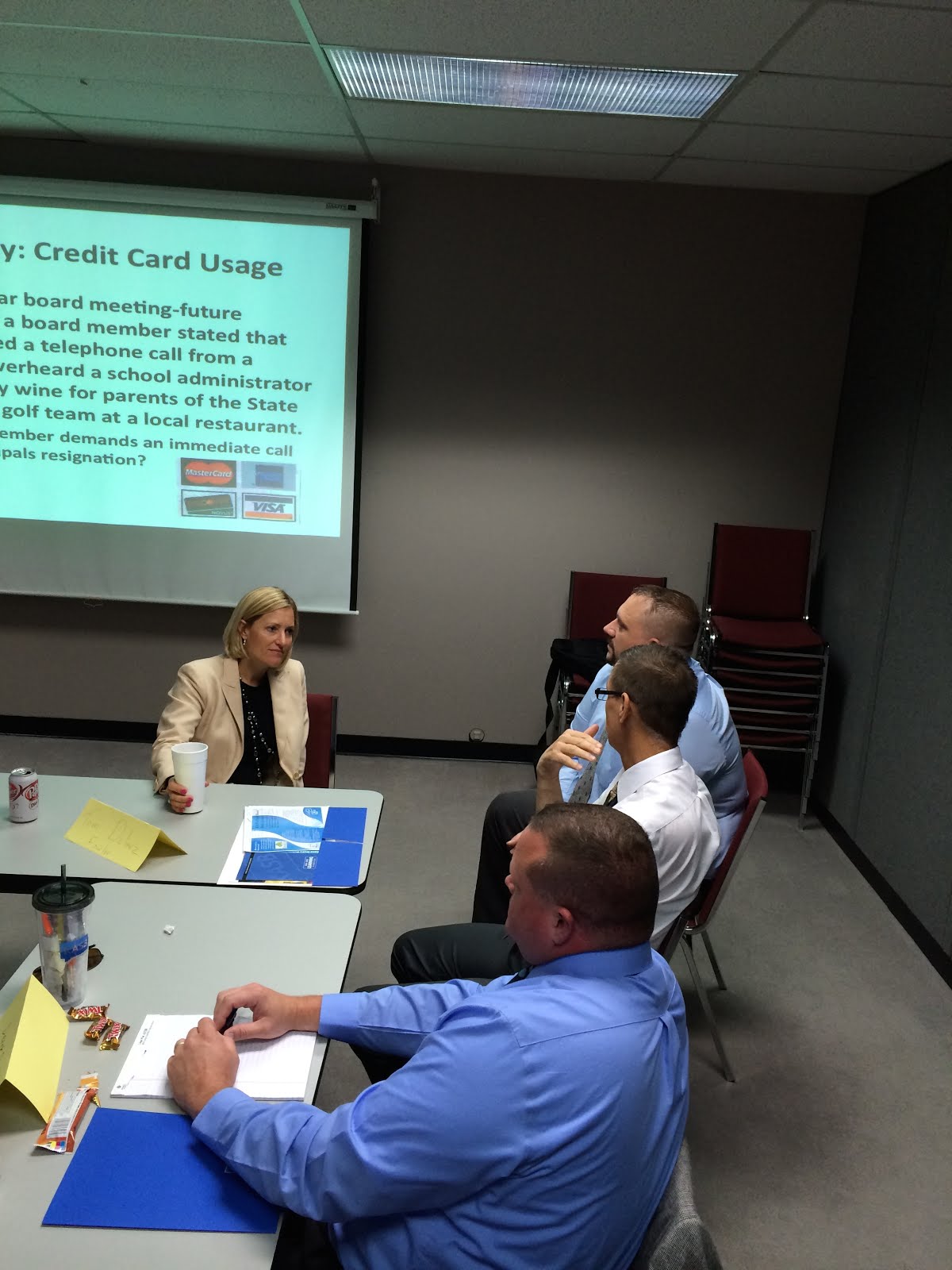
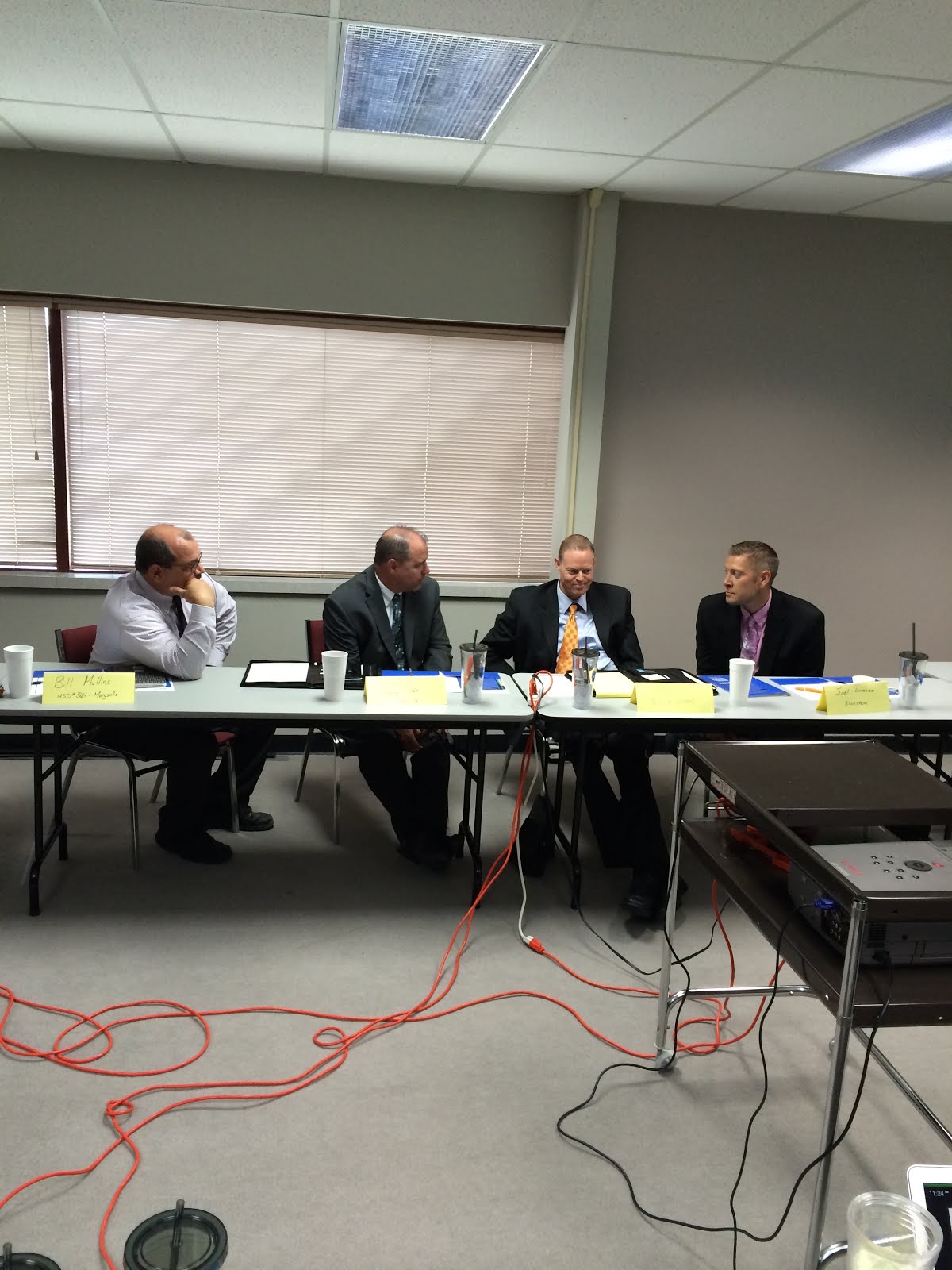
The Kansas Associations of School Boards hosted their annual New Superintendents Workshop on August 21, at the KASB offices.  New superintendents from around the state participated in the day of activities.  Topics included information based on our mission of “Being a Voice, Improving Student Outcomes, and Culture of Service.  Several staff members shared insights into the many services KASB provides for school boards and districts.

IMG_3123.jpg


New superintendents in attending were:
Jason Crawford, USD 283 Elk Valley
Lyn Rantz , USD 464 Tonganoxie
Bill Mullins,  USD 364 Marysville
Greg Clark USD 112 Central Plains
Steve Lilly, USD 342 McLouth
Derick Reihart, USD 303 Ness City
Joel Lovesee, USD 205 Bluestem
Tom Dolenz, USD 225, Fowler


KASB asked several experienced superintendents to help participate in the day by sharing insights from their early years in their new role as a district leader.

IMG_3121.jpg

Mr. Doug Conwell, from USD 417 Morris County Schools shared insights about the evaluation process and the impact a high quality model can have on improving instruction and impacting achievement.  Mr. Darrell Kohlman, from USD 115 Nemaha Central discussed the many trials and challenges of leading a district through the consolidation process and unifying a newly designed district.  He also share how utilizing KASB Legal Services helped to make his job more manageable.


Dr. Mike Berblinger, from USD 313 Buhler shared the importance of working with the board to establish clear goals and expectations for continuous improvement.   He explained how developing a clear set of goals has allowed he and the board to focus their attention on what really matters to the district and community.  Dr. Berblinger had just concluded his first year as a superintendent.  His insights allowed the new superintendents to witness the influence a new superintendent and the local board can make on the culture and climate of a district.

All in all it was a day of networking and sharing insights with leaders new to role of district leadership.  KASB staff also took the opportunity to create an awareness of the many services we provide for districts that can help improve efficiency and effectiveness.